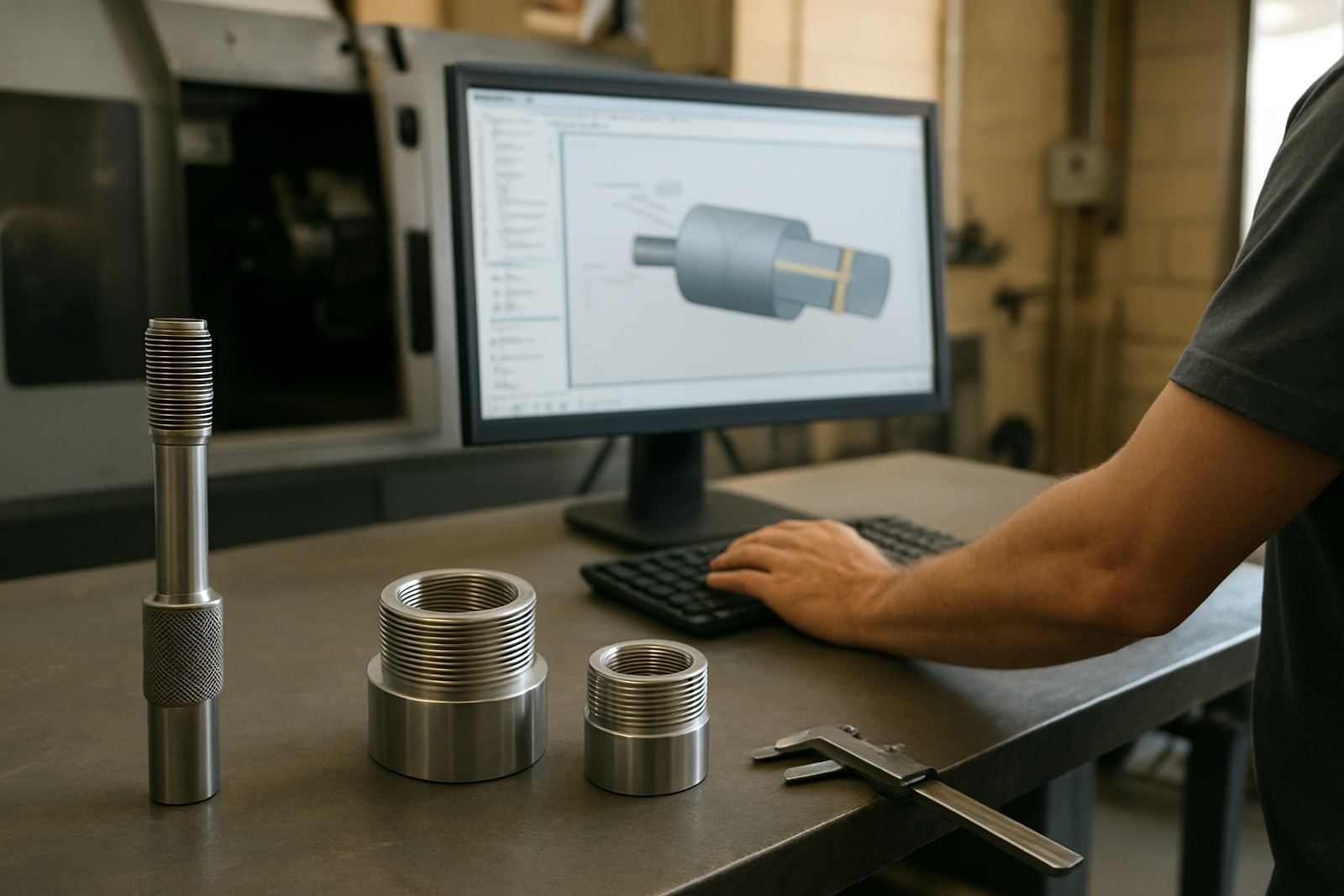
Why Threading Needs More Than a Quick Toolpath Check
Threading is one of those jobs where a small mistake can turn into a broken tool or a scrap part in seconds. Pitch, lead, spindle sync, infeed method, stock allowance and retract moves all have to agree with the machine and the drawing.
On a CNC shop floor in South Africa, that matters even more when the power is unstable, the machine is working through a busy production run, or the operator is handed a job from a different programmer. If the file looks fine but the post processor outputs the wrong G-code format, the machine will still do exactly what it has been told, not what was intended.
- Confirm thread pitch and handedness against the drawing.
- Check whether the machine expects imperial or metric input for the cycle.
- Verify spindle direction, sync and retract path before the first part.
- Make sure the tool offset, insert form and holder clearance match the job.
The Pre-Run Checks That Catch Most Threading Mistakes
A good threading setup starts with the basics. The machine zero must be right, the part must be clamped properly and the stock size must leave enough room for the thread form. If the job is on a lathe, verify the bore size and pilot diameter before the programme is released. On milling or tapping operations, the same discipline applies, just with different cycles and feeds.
The next step is the post output. A post processor can be set up to suit a specific control and a specific machine behaviour. If that post is not tuned properly, you can end up with incorrect dwell, the wrong retract move or feed changes that upset the thread finish. That is why many shops ask for post tuning before a job goes live, especially when they run more than one machine type.
- Run a dry simulation and inspect the sync points, not just the toolpath shape.
- Confirm that the post creates the right thread cycle for that control.
- Check for safe clearance at the start and end of the thread.
- Watch for subprogram calls or modal states that carry over from an earlier operation.
How Post Processors Affect Thread Quality on the Floor
Programmers often focus on geometry, but the post processor is what the machine actually reads. That means the output must suit the control, the machine type and the way the shop works. A routing shop cutting plastic fixtures does not need the same thread behaviour as a milling shop cutting steel brackets or a turning shop making hydraulic fittings.
For South African shops, support is often about practical details. A machine may have had a control retrofit, a new spindle encoder or a different tool turret, and the old post no longer matches. When that happens, the safest route is to update the post, then verify the first part with the operator watching the cycle. It is slower for one job, but much faster than scrapping a batch.
- Match the post to the exact control model and machine options.
- Test thread output after any retrofit or software update.
- Use a proven post for repeat jobs, then save the verified revision.
- Keep a note of thread depths, spring passes and insert data for next time.
A Pretoria Example: Avoiding Scrap on a Hydraulic Coupling Job
A Pretoria workshop recently had a batch of hydraulic couplings to produce for a client in Gauteng. The threads looked straightforward on paper, but the first dry run showed a clearance issue near the end of the thread and a lead value that did not suit the machine setup. The programmer adjusted the post, checked the tool approach and added a safer retract move before any material was cut.
That one review avoided a likely crash and saved a full batch of parts. It also showed something important: the shop did not need a new machine, only better setup discipline and a post that matched the machine as it was actually configured. In many cases, that is where first job support and workflow audits pay for themselves.
What Training Should Cover Before You Trust a New Thread Program
Good operator and programmer training should not stop at button pushing. It needs to cover the logic behind the cycle, the signs of an incorrect post and the checks that protect the machine when the workshop is under pressure. In a local shop, that includes load-shedding recovery, whether the machine lost a reference point, and how to pick up a job safely after an interruption.
Training should also be practical. People remember better when they work through a real part, a real setup and a real thread form. That is why hands-on training matters for shops in Centurion, Pretoria, Johannesburg, Vereeniging, Durban and Cape Town, especially where multiple operators share the same machine. The aim is not only to make the programme run, but to make the first part correct and repeatable.
- Teach operators what to check before pressing cycle start.
- Show programmers how thread cycles differ between machines.
- Include restart procedures after load-shedding or an emergency stop.
- Cover tool wear, insert changes and when to stop the job.
When to Ask for Support Before Cutting the First Thread
If a threading job looks unusual, that is the time to ask for help, not after the part has been ruined. Jobs with tight tolerances, special forms, mixed machine types or a new control revision deserve extra attention. So do high-value batches, repeat orders with a new material, and anything where the operator is not fully familiar with the programme.
CNC shops across South Africa often need support with custom post processors, licence installation, machine onboarding and first job support. Remote troubleshooting can sort many issues quickly, while on-site training helps teams build confidence around real production work. A careful check today can keep tomorrow's shift moving and the machine making parts instead of apologies.