Why older control posts still matter in busy shops
Many South African shops still run capable routers, mills, turning centres and plasma tables with older controls that were installed years ago. The machine may cut well, but if the post spits out the wrong format, the wrong codes or awkward tool changes, the whole workflow slows down and mistakes start creeping in.
A good post for an older control is really a translator. It takes the CAD/CAM toolpath and shapes it into code the machine understands, including feeds, spindle logic, work offsets, safe moves and tool calls. For older equipment, that translation often needs more care because the control may have limited memory, strict syntax or quirks that newer systems do not have.
In practice, this matters when a shop is trying to keep production going during load-shedding windows, after hours, or with a lean team. If the code is clean and predictable, the operator can focus on setup and cutting instead of fixing odd behaviour at the machine.
What usually goes wrong when the post does not fit the machine
The most common problems are not dramatic at first. A toolpath posts, the program loads, and the machine starts. Then the operator notices a strange decimal format, a missing line for spindle start, or a feed rate that is too aggressive for the material and cutter. On older controls, even a small mismatch can stop production or damage a part.
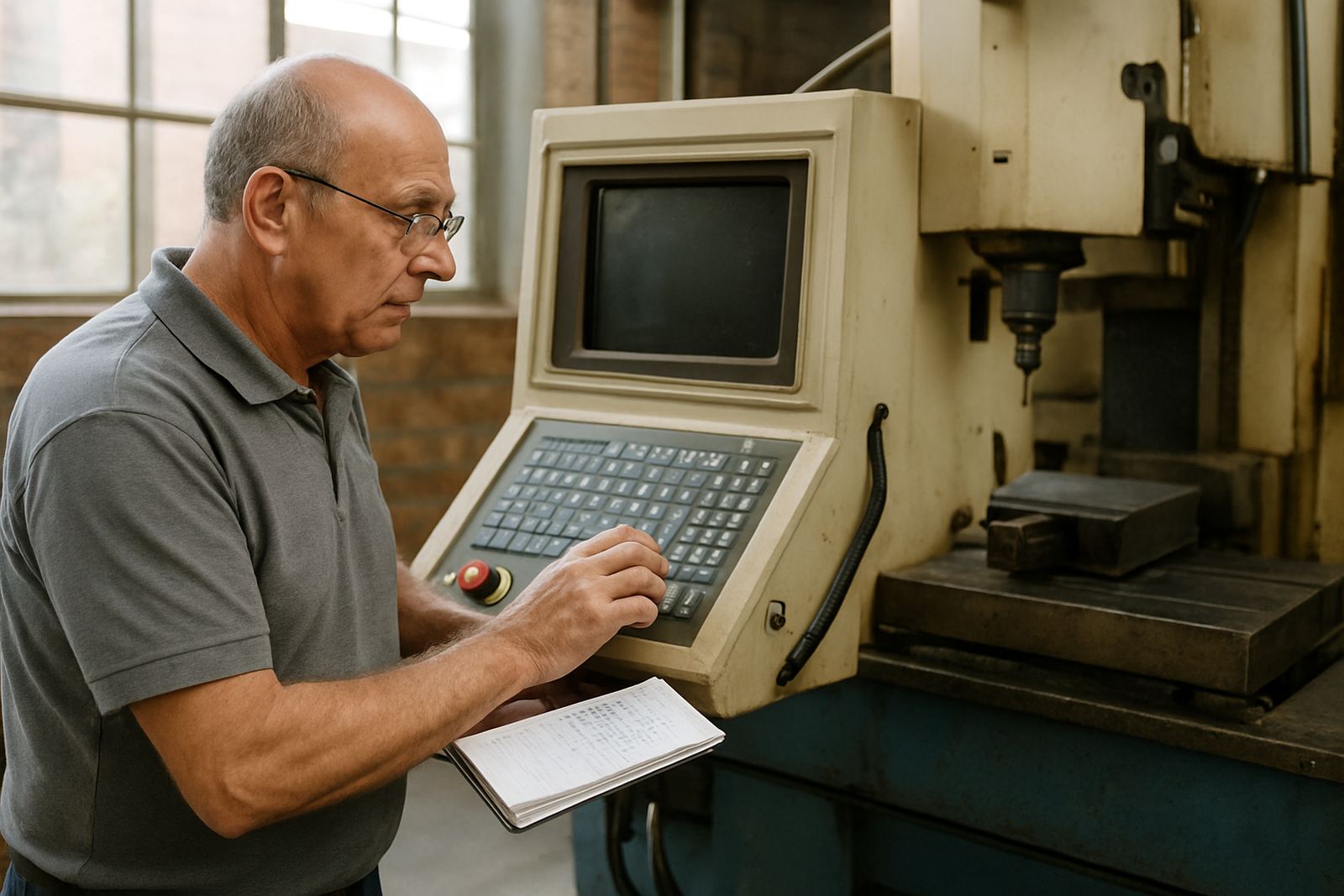
Another issue is that older machines often have been modified over the years. A table may have new drives, a changed tool rack, a repaired spindle or a retrofitted control panel. The original post no longer reflects the real machine, so the code needs tuning against the current setup, not the book from ten years ago.
We also see shops that use one post for every machine in the workshop. That sounds convenient, but it usually creates more work later. A router in Pretoria, for example, may need different output from a plasma table in Vereeniging because the control, toolpath style and operator process are all different.
How post tuning keeps legacy equipment in production
Post tuning starts with the machine, not the software menu. We look at the control type, the axes, the tool change sequence, the machine limits and the way the shop actually runs jobs. From there we adjust the output so the code matches the way the machine behaves on the floor.
For some shops, that means creating a custom post from scratch. For others, it means fixing a nearly correct file by adjusting retract moves, canned cycles, lead-ins, tool call lines or post headers. The aim is simple: clean code that runs first time and can be trusted by the operator on a Monday morning.
Older machines also benefit from workflow decisions outside the post itself. A careful tool library, a sensible naming convention and a standard job folder structure reduce mistakes when different programmers share the same equipment. That is especially useful when there are only a few people in the shop and one person is covering setup, programming and support calls.
Training helps here as well. If the programmer understands why the post is outputting a certain format, they are less likely to break it by accident when a quick change is needed.
Older control posts in routing, milling, turning and plasma work
Different machine types place different pressure on the post. A router may need compact output and fast nesting routines. A milling machine often needs precise tool offsets, spindle direction and careful retract logic. Turning centres depend on accurate cycles and consistent approach moves. Plasma tables need clean torch on and torch off timing, along with pierce and cut height control.
Older controls can be perfectly usable in all four environments, but only if the code reflects the machine's actual behaviour. If a plasma table in Durban is cutting near the coast, for instance, the shop may already be managing humidity, surface rust and slower maintenance intervals. Clean code will not solve every issue, but it does remove one more variable from the process.
When we support older machines, we also look at practical shop constraints. Some workshops have unstable power, limited backup time and strict production slots. Others work across multiple branches and need one programming standard that can be used by teams in Johannesburg, Centurion and Cape Town without confusion.
A local example from a Centurion shop with mixed-age machines
A small Centurion workshop came to us with an older router and a newer milling machine on the same programming workflow. The router had been giving trouble for months because the code was too long for the control and the tool changes were not coming out in the right order. Operators were spending time editing files at the machine, which slowed every job and created risk.
We reviewed the machine, tuned the router post and aligned the job setup with the way the team actually worked. We also cleaned up the tool library and added first job support so the first few runs were monitored closely. The result was not flashy, but it mattered: less editing at the machine, fewer stoppages, and better confidence for the operator.
That is the value of older control support. It keeps equipment in use instead of forcing a premature replacement, and it helps the shop get more hours out of machines that still have plenty of life left.
What to check before you ask for post support
If your older machine is slowing down the shop, it helps to gather a few details before support starts. The control model, machine make, current post file, sample part program and a list of recurring faults will speed up the process. If possible, note whether the issue happens on every job or only on certain materials, tools or operators.
It also helps to think about what success looks like. Do you need the machine to run with fewer alarms, shorter programs, cleaner tool changes or easier handover between staff? The more practical the goal, the easier it is to tune the post around it.
For shops across Pretoria, Johannesburg, Vereeniging, Durban and Cape Town, the aim is the same: keep the machine making saleable parts with as little interruption as possible. Older control posts can do that well when they are matched properly and supported with sensible training.