A small start with a practical purpose
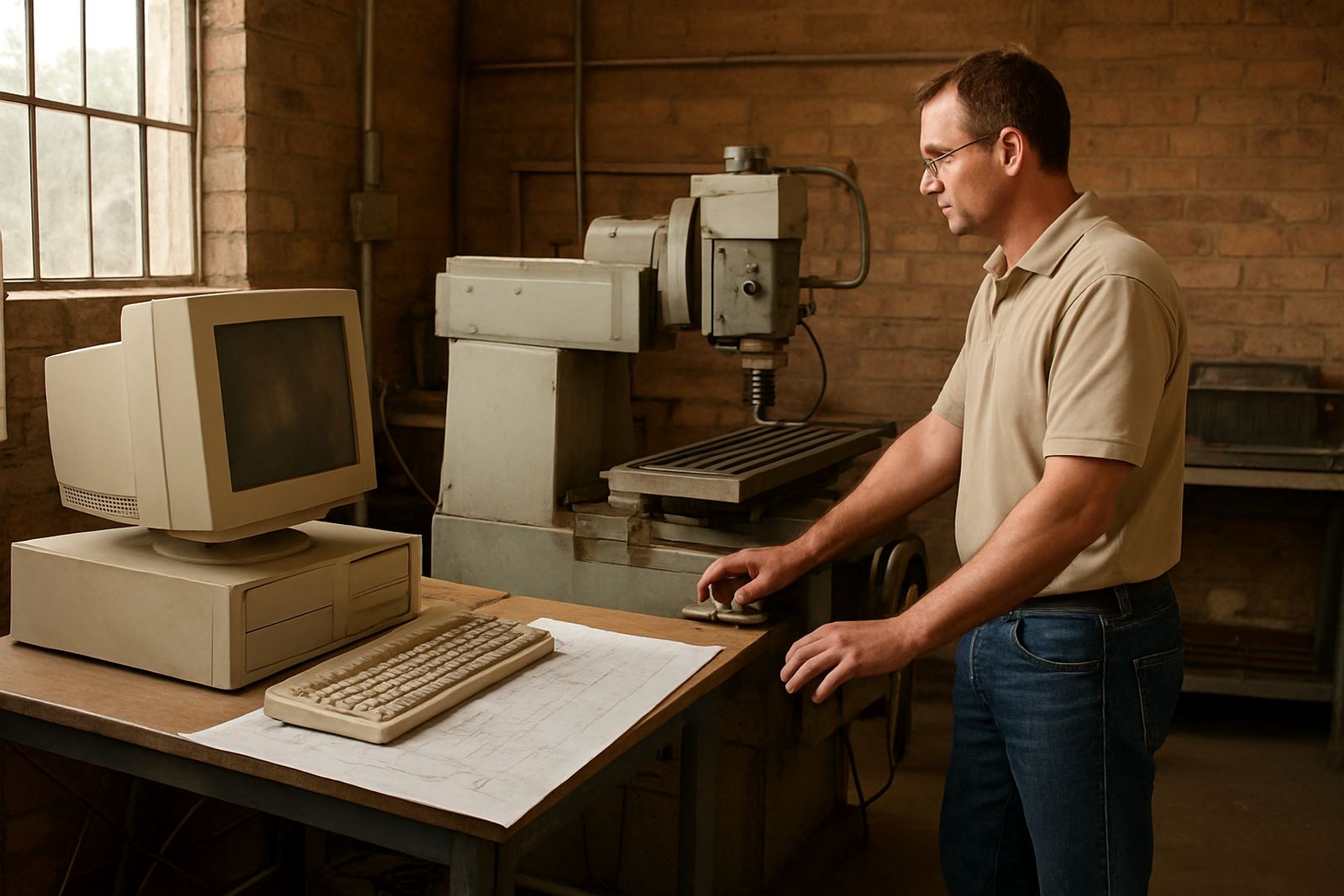
Pieter Johannes van der Merwe started CNC Software to sort out the workshop issues that waste time in practice: bad post output, machine setup problems and operator mistakes that stop a job from running cleanly. The first jobs were not glamorous. They were the kind that matter in a workshop: getting licences installed properly, checking machine settings, and making sure a program could run on the actual machine without drama.
Centurion was the natural base for that work. It placed the business within reach of Pretoria, Johannesburg, the East Rand and the West Rand, while still giving access to shops further afield when needed. In the early years, the focus stayed narrow and useful. No fancy promises, just solid CAD/CAM support for routing, milling, turning and plasma shops dealing with production issues.
- First licence installations for local CNC users
- Initial custom post-processor setups for mixed machine shops
- Hands-on support for owners who needed straight answers, not theory
Post-processors became the core strength
Over time it was clear that post-processors were not an afterthought, they were central to how a shop worked every day. Tiaan Ferreira joined the technical side of that work and helped shape a stronger process for machine-specific output. Shops began coming back for changes after machine upgrades, controller swaps and new tooling methods, especially where older equipment needed careful tuning.
During this period, CNC Software built a practical reputation for listening first. A router shop in Vereeniging might need one approach, while a turning shop in Pretoria needed another. Coastal humidity in Durban affected storage and machine care differently from a dry inland factory, so support could not be one-size-fits-all. The team learned to ask better questions, then tune the software to suit the job and the machine.
- Custom post-processors developed for varied controllers and machine types
- Post tuning after machine upgrades or new tooling strategies
- Early on-site training for operators and programmers in Gauteng
Training moved from optional to essential
As the customer base grew, the business saw that software alone was never enough. Many shops needed structured training so that operators, programmers and owners could each work with confidence. Phenyo Ngema joined as Training Coordinator and helped formalise practical sessions that matched real production flow, not classroom theory that falls apart on the machine floor.
Training soon became one of the most requested services, especially for shops taking on more CNC work for the first time. The sessions were built around common needs like first-job setup, safe machine handover, tool library building, and what to do when power cuts or load-shedding interrupt a shift. The aim was simple: keep the machine running, reduce scrap and help the team use the software properly from day one.
- Operator training for day-to-day production teams
- Programmer training for more complex jobs and setup changes
- Owner training for managers who needed visibility on workflow and output
Support expanded beyond the workshop floor
Over time, CNC Software was no longer just helping with installation and output. Shops wanted support around the full workflow, from how jobs were prepared to how tools were managed and how much time was being lost between departments. Farieda Jacobs took on technical support leadership and helped strengthen remote troubleshooting, while Mthunzi Diale handled implementation work that needed careful hands-on follow-through.
Workflow audits became a regular part of the service offering. These were often eye-opening for customers, because a small fix in file naming, tool setup or operator handover could save hours over a week. Annual support plans also began to matter more as clients wanted predictable assistance instead of waiting for something to break. During this time, the team worked with shops in Cape Town, Durban and across Gauteng, often helping them through machine onboarding and first production runs.
- Remote troubleshooting for urgent production problems
- Workflow audits to identify time loss and repeated errors
- Machine onboarding support for new equipment and team handovers
The team grew with the work
Recent years brought a sharper focus on continuity. Shops were under pressure from delayed imports, power interruptions and tighter delivery dates, so support had to be more responsive and more organised. Vanisha Rampersad joined to strengthen customer success, while Ompha Mabandla helped with applications engineering across different machine environments. The team became more structured, but still hands-on.
At this stage, CNC Software was supporting more shops across Pretoria, Johannesburg, Vereeniging, Durban and Cape Town, plus surrounding areas like the East Rand and West Rand. The work included licence installation, tool library builds and first job support, often within the same production cycle. A lot of what made the difference was not just technical knowledge, but the ability to stay focused when a shop needed a part sorted before the next shift.
- Expanded support across more South African regions
- Stronger customer success and follow-through after installation
- More structured handover support for new users and new machines
Today: A Centurion base serving shops across South Africa
CNC Software serves CNC routing, milling, turning and plasma shops across South Africa with a practical approach shaped by years of workshop support. The services now cover a wider range of shop requirements, with focus on making the machine usable and the setup fit for production. Pieter Johannes van der Merwe leads the business from the Centurion base, with a team that handles each job with technical depth and careful follow-up.
Clients now contact the team through the enquiry form on the contact page, and from there the right person picks up the work depending on the need. Some jobs are quick licence installations. Others involve a custom post-processor, a workflow audit and a training session spread over several days. The business continues to support new and established shops in a way that suits local conditions, local machines and local production demands.
- Centurion base with training reach into Pretoria, Johannesburg, Vereeniging, Durban and Cape Town
- Services now include annual support plans, post tuning and first job support
- Ongoing assistance for shops that want stable output and less downtime
Practical Support Measured On The Machine Floor
As the work has expanded, the focus has stayed on what happens at the machine: practical support, clear setup and training that holds up on the shop floor. CNC Software still believes that good support is practical, direct and measured against what happens on the machine floor. That means checking the post before the job starts, training the people who will actually run the work, and staying available when a shop needs help sorting out a problem.
The history of CNC Software is really a history of keeping pace with South African manufacturing without losing sight of the basics. Machines changed, software changed and customer expectations changed, but the need for accurate output, reliable support and proper training did not. That is why the business keeps building from the same foundation it started with.