
Why the same bit lasts longer on one job than another
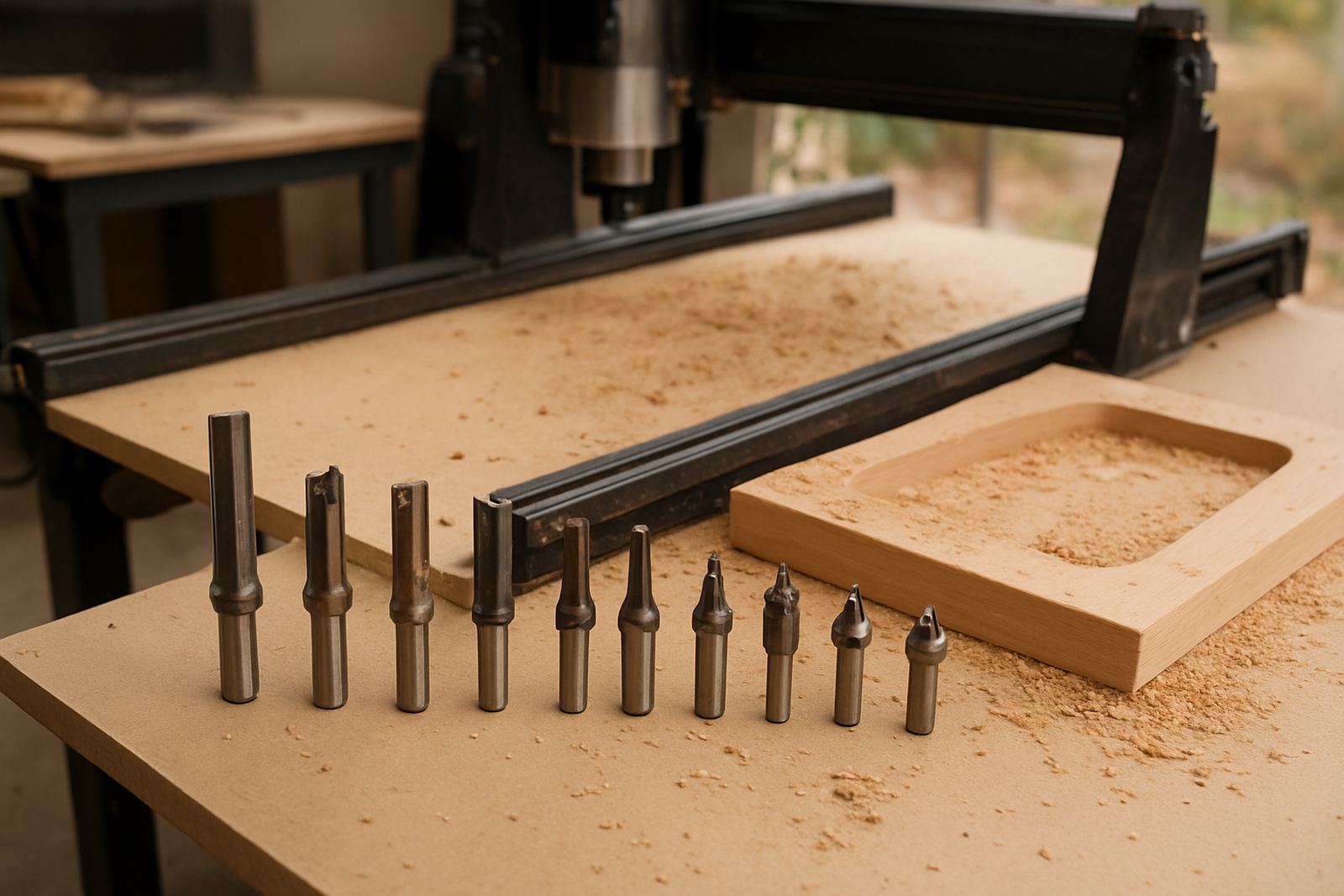
A router bit can cut MDF all week on one machine and fail on another after a few sheets. The difference is often not the carbide, but the program that is pushing it, the way the material is held, and how much time the tool spends rubbing instead of cutting. In Centurion and Pretoria we see this most often on nesting jobs where the pressure is on to finish panels fast, but the feeds, spindle speed and passes were copied from an old file with no real check.
Heat is the enemy. When a cutter runs too slow or takes too light a chip load, it starts polishing the material instead of removing it cleanly. That builds heat at the cutting edge, especially on laminated board, MDF and plastics, and the bit goes blunt far sooner than it should.
Feeds, speeds and chip load need to work together
Many shops focus on spindle speed only, but the cutter wants a proper bite every revolution. If the feed rate is too low for the chosen RPM, the tool is rubbing. If the feed is too high, the edge chips or the machine starts to chatter. The sweet spot depends on the material, flute count, bit diameter and machine rigidity.
- For MDF and particle board, keep chip evacuation in mind so dust does not pack around the cutter.
- On plastics, avoid too much heat by using the right feed and a clean path with fewer re-cuts.
- On solid timber, listen for squeal or chatter, it usually means the toolpath or feed is not happy.
- When a machine is older or underpowered, reduce the cut depth and use more passes rather than forcing one heavy pass.
We often remind operators that a faster spindle does not always mean a cleaner finish. Sometimes a small change in feed is enough to stop edge burn and improve bit life at the same time.
Toolpath style can save cutting edges before they go blunt
Programming decisions matter just as much as the tool choice. A well planned toolpath keeps the cutter loaded evenly and avoids sudden changes that shock the edge. Climb cutting can give a better finish on many routing jobs, but only when the machine is tight, the hold-down is good and the material is secure.
On nested sheet work, ramping into the cut is often kinder to the bit than plunging straight down. Lead in and lead out moves should be checked too, because a small overcut at the start or end of a profile can create unnecessary wear. In more demanding routering jobs, one badly chosen corner strategy can shorten tool life by a surprising amount.
- Use ramp or helix entry where the cutter and material allow it.
- Reduce sharp direction changes in high speed finishing paths.
- Keep finishing passes light so the first roughing pass removes most of the load.
- Leave enough stock for the final pass, but not so much that the cutter has to work hard twice.
Dust extraction and hold-down are part of tool life
When dust is left in the cut, the bit runs hotter and the finish suffers. Good extraction keeps the groove clear, which is especially important in coastal areas like Durban and Cape Town where humidity can make board products swell and grip the cutter more tightly. A dirty spoilboard or weak extraction system can turn a neat job into a hot, gritty one very quickly.
Hold-down matters just as much. If the sheet moves even slightly, the cutter takes an uneven bite and the edge wears on one side first. Vacuum systems, pods, clamps and spoilboard maintenance all affect how long a bit lasts. On some factory floors load-shedding also means machines restart in a hurry after power returns, so the setup needs to be checked before the next run starts.
- Clear dust regularly and check that hoses are not blocked.
- Replace damaged spoilboard sections before they start lifting panels.
- Check vacuum zones and seals before a long production batch.
- Do not assume a new cutter will fix a lifting sheet or poor clamping.
Post-processor settings can quietly change tool wear
A shop may have the right CAM file, but a poor post can still send the machine the wrong kind of work. If the post is adding unnecessary pauses, tiny retracts or awkward point-to-point moves, the cutter keeps starting and stopping. That creates extra heat and knocks the sharp edge down faster than expected.
Custom post-processors help make the output suit the machine and the job. For routing, milling, turning or plasma work, the machine should receive clean code that matches its controller and cutting style. That is one reason we tune posts for the actual shop setup rather than forcing every machine to run the same way. It saves time, reduces scrap and gives the operator fewer surprises on the first run.
A Pretoria sheet shop example shows the cost of guesswork
One Pretoria shop running high volume kitchen components had a problem with premature bit wear on laminated board. The operator was using the same program for different panel thicknesses, with a safe looking feed that was actually too slow for the spindle speed. The bit was getting hot, the edge was burning and the finish was rough enough to send boards back for rework.
After a workflow audit we adjusted the feeds, reduced unnecessary retracts, changed the lead in and set the roughing pass so the finishing cutter only had to clean up. We also checked the post output and found extra dwell time between certain moves. The result was not dramatic in the showy sense, just practical: longer tool life, fewer rejected sheets and a steadier day on the floor. The operators noticed it by lunchtime because the cutter stopped smelling hot and the machine sounded calmer.