
Why fixture plates matter on repeat work
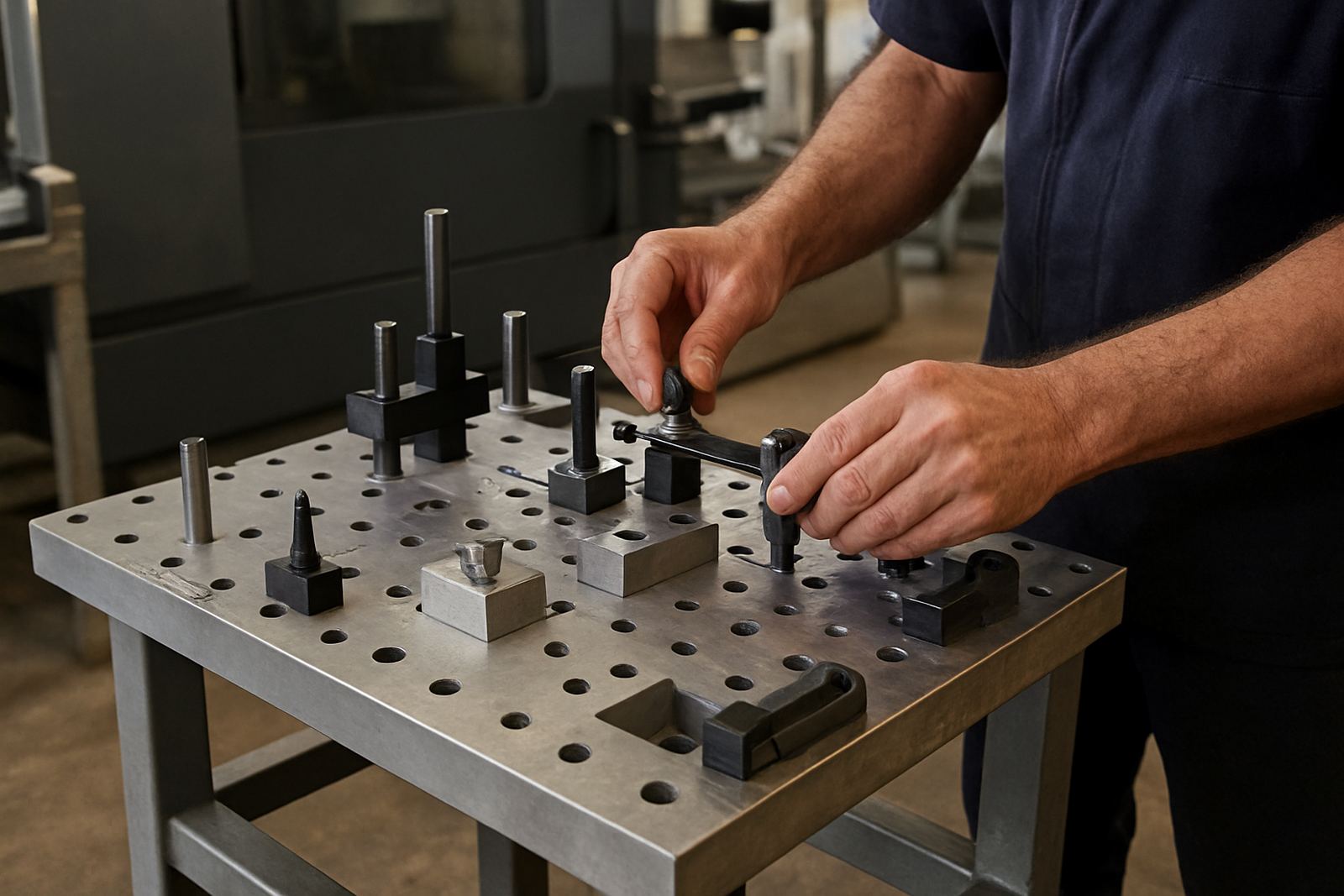
A fixture plate gives you a fixed reference that stays on the table while parts, soft jaws, clamps or vacuum pods change from job to job. In a shop doing repeat milling for aluminium brackets, panels, jigs or mild steel plates, that means less time spent indicating from scratch and less chance of starting a run with a crooked part. The goal is simple: make the first setup hard, then make every setup after that quicker.
For many South African job shops, repeat work arrives in small batches rather than long production runs. That means the gain from a good fixture plate is not just speed, it is consistency. If a job returns three months later, the datum positions are still known and the operator does not need to reinvent the clamping every time.
Build the plate around the jobs you actually run
A common mistake is buying or making a plate that looks flexible on paper but does not match the parts on the floor. Start by listing the top ten repeat jobs. Note material size, edge access, hold-down method and whether the part is cut once or returned for a second op. Then choose a hole pattern and locating system that supports those parts first. A plate with too many random holes only creates confusion.
- Use a grid that matches your most common blank sizes, not a generic pattern that wastes space.
- Keep locating pins consistent in diameter and height so operators do not mix them up.
- Leave enough clearance for toolpaths, clamps and chip evacuation, especially on aluminium.
- Mark plate zero and part zero clearly, even if the machine has a probing routine.
If your shop handles both routing and milling, separate plate styles can help. Router tables usually need more surface coverage and more vacuum or toe-clamping options, while milling plates often need higher stiffness and stronger mechanical grip.
Set up for repeatability, not just strength
The strongest clamping system is not always the best one. Fixture plates work best when they reduce variation. That means the part lands in the same place every time, with the same pressure, against the same stops. If your stop screws shift under load, the whole system is weak no matter how heavy the plate looks.
Keep locating faces clean and easy to inspect. On a dusty site near Johannesburg or Pretoria, fine swarf and coolant mist can build up fast, then the second part of the day sits 0,3 mm off and nobody can explain why. A quick wipe between jobs often saves an hour of rework. If the shop runs through load-shedding, protect stored plates from rust and keep a light oil film on mild steel surfaces.
- Use dowel-based location for repeat jobs that need tight positional control.
- Choose clamp points that do not distort thin sheet or aluminium plate.
- Design access for the cutter first, then the clamp second.
- Make sure the plate can be loaded by one operator without awkward lifting.
Match the plate to the machine and material
A plate that works on a vertical mill may not suit a plasma table or a larger router. Milling shops often need a heavier plate with precise hole spacing and reliable re-zeroing after tool changes. Plasma shops need a layout that keeps cut zones clear of slag and allows easy part removal. Routing shops, especially those cutting board, plastics or aluminium composite, may need a lighter approach with more zones and better spoilboard protection.
Material choice matters too. Aluminium plates are useful where weight must stay down and corrosion is a concern, but they can wear faster on hard clamp points. Mild steel is tougher and often cheaper, though it needs proper rust control in coastal areas like Durban or Cape Town where humidity can bite. If the plate lives near coolant spray, stainless hardware and anti-seize on fasteners are worth the trouble.
Use the plate to support the programming workflow
Fixture plates are not only a workshop hardware decision. They shape the CAM workflow as well. When the hole pattern, stops and datum points are standardised, programmers can build repeat jobs faster and avoid last-minute adjustments at the machine. That also makes post processing cleaner because the same setup assumptions can be reused from one file to the next.
In practical terms, a good plate lets the programmer define a known origin and keep the same tool entry behaviour across multiple jobs. This matters when different operators run the machine on different shifts. A clear setup note, a labelled plate map and a saved tool library all reduce handover mistakes. At one Vereeniging shop we saw a repeat panel job cut setup time from nearly 40 minutes to under 15 after the locating points were standardised, which made the second op far easier to repeat without drama.
- Record plate dimensions, zero points and clamp positions in the job notes.
- Keep one master drawing for the plate layout and update it only when the hardware changes.
- Train operators to check wear on pins, stops and threaded holes before every run.
- Store the setup photo with the job file so the next run starts from the same reference.
What South African shops should watch for before they commit
Before you commit to a fixture plate system, check the practical limits of the shop. Can the machine table handle the extra height? Is there enough Z travel left for the longest cutter? Can the operator remove chips without reaching too far across moving parts? In smaller premises, especially where floor space is tight, a plate that is easy to store and clean may be more useful than one that is oversized and heavy.
Also think about municipal and safety requirements if the setup uses compressed air, vacuum pumps or electrical controls. Cable routing should stay tidy and protected, and any moving hoses must not sit where they will be crushed by stock or trolleys. If you are training new programmers or owners, keep the fixture system simple enough that it can be explained in one session, not over three site visits.
For shops in Pretoria, Johannesburg, Durban, Cape Town and surrounding areas, the best fixture plate strategy is usually the one that reduces rework while keeping the changeover honest. It should fit the machines you run, the parts you make and the people who load them. When that is done properly, repeat milling jobs stop being a nuisance and start becoming dependable work.