
What Foam Router CAM does on the shop floor
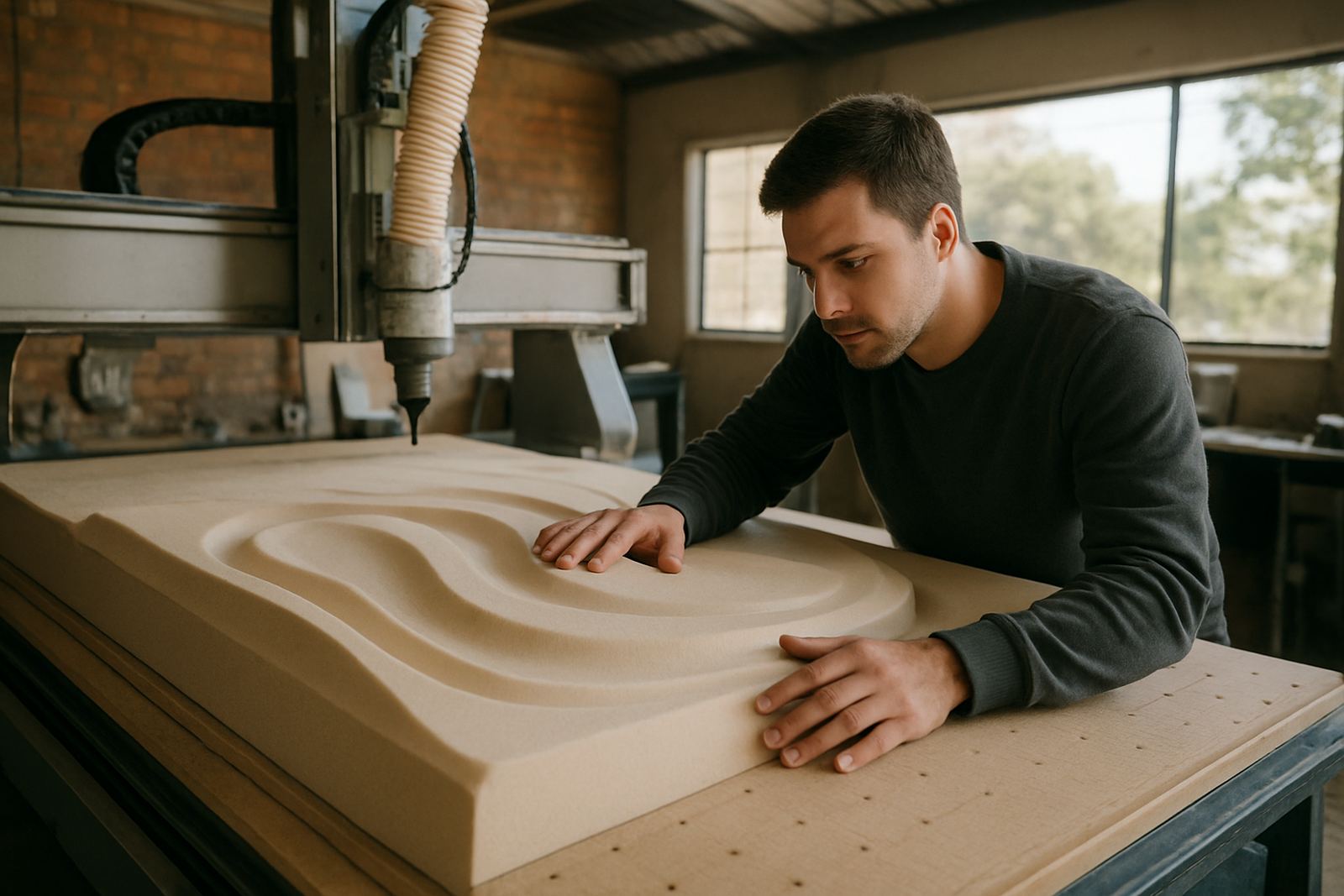
Foam Router CAM is used to program high-speed cutting paths for expanded foam, board stock and similar low-density materials where surface finish and cycle time matter. It suits pattern shops, signage teams, display makers, boat and automotive mould work, and general CNC routing where the job must move quickly without tearing or overcutting the part.
The main advantage is control. You can manage entry moves, stepovers, cut direction, finishing passes and safe retracts so the machine stays efficient and the surface stays usable for downstream sanding, sealing or mould making. For shops in Pretoria, Johannesburg, Durban and Cape Town, that matters when deadlines are tight and the machine must still handle load-shedding recovery and short turnaround work.
We help with licence installation, machine onboarding and post tuning so the software output matches the machine, spindle speed and controller you already use. If your shop handles mould plugs one week and lightweight architectural features the next, the CAM setup needs to stay practical, not complicated.
Common foam work and where this CAM suits best
This product suits shops working with 3D and 2.5D foam jobs where material removal is fast and the final shape needs to be accurate before finishing. It is a good fit for routed mould masters, prototype shapes, vacuum forming plugs, presentation pieces and light industrial forms. On larger jobs, the software helps maintain repeatability across multiple parts, which is useful when one drawing must be cut into several sizes for a customer or contractor.
Typical applications include:
- Mould plugs for fibreglass and composite work
- Architecture and display props
- Signage letters and scenic pieces
- Lightweight tooling forms and prototypes
- Packaging mock-ups and exhibition components
If your shop also cuts wood, MDF or plastic on the same router, we can set up separate post-processors and toolpath habits so operators do not mix foam settings with denser material settings. That keeps chips manageable and helps prevent tool wear, especially on busy machines that run long shifts.
Sizes, versions and setup options
Foam Router CAM can be supplied as a single-seat licence or as part of a multi-user shop setup where more than one programmer needs access. For smaller teams, one licence may be enough for programming and machine preparation. For larger operations, we can assist with licence installation across multiple workstations and help align each seat with the right machine output.
Setup can also be matched to the machines in your workshop. Whether you run a compact router, a gantry table with a larger cutting envelope, or a mixed workflow that includes milling, turning or plasma on other machines, the post-processor must produce code that is clean and predictable. That is where custom post-processors and post tuning come in, especially if your controller expects a specific format, line structure or tool-change sequence.
Size selection is less about the software itself and more about the shop's workflow. If your parts are small and frequent, you need quick nesting and clean operator handover. If your parts are large, the focus is on stable roughing, accurate finishing and safe axis travel across the full bed size.
Power, installation and workshop conditions
Software installation is straightforward, but the workshop conditions around it still matter. A licensed workstation should have stable power, enough storage for large jobs and a practical backup plan for interruptions. In areas where load-shedding and voltage dips are part of the day, we recommend keeping programming machines on protected power and saving project files in a way that does not leave a job half finished after a shutdown.
For site work we help with licence installation, machine onboarding and first job support. If the machine sits in a humid coastal shop in Durban or a dusty fabrication bay inland, the code must still be tested on the actual controller before a production run. We also look at network access, file transfer methods and operator access so that the programmer does not become the bottleneck.
- Stable Windows workstation with enough RAM for large toolpath files
- Reliable backup power or UPS for file safety during outages
- Machine controller details ready before installation
- Tool and spindle data available for the first post tuning session
- Network or USB transfer plan agreed before the first live job
Care, servicing and keeping foam jobs consistent
Foam work may be soft, but it still needs discipline. Dull cutters, poor dust extraction and loose holding can spoil a clean surface fast. The CAM file should be reviewed regularly so that feeds, speeds, lead-ins and finishing passes suit the actual material being used. If the shop changes foam density or moves to a different board thickness, the toolpath should be checked again rather than reused blindly.
We support annual support plans, remote troubleshooting and workflow audits for shops that want fewer surprises on the machine. This is useful when different operators are loading jobs on different shifts or when a new programmer needs to inherit older files. A simple review can catch the little things that cost time, like a wrong tool number, a feed rate that is too aggressive, or a post setting that sends the machine into an awkward retract.
For shops with multiple branches or training sites, we can keep the setup consistent across Centurion, Pretoria, Johannesburg, Vereeniging, Durban and Cape Town. That helps when the same customer wants the same part repeated at another location without reworking the whole process.
What to check before you order
Before ordering Foam Router CAM, it helps to have the machine details and job requirements ready. That lets us set the licence, post-processor and training plan correctly the first time. If the goal is mould plugs, include the part size, expected finish and whether the job needs roughing only or a roughing plus finishing strategy. If the part is large, mention the machine travel and any clearance limits around fixtures, dust hoses or vacuum tables.
Please check the following before you send an enquiry:
- Machine type and controller model
- Work envelope in X, Y and Z
- Typical foam material and thickness
- Required surface finish and tolerance
- Number of operators or programmers who need training
- Whether you need on-site setup or remote support
If you already have CAM files or older post output, bring those along. We can compare them to the current machine behaviour and tune the post to suit real shop conditions, not just the drawing on screen.
Key facts
| Primary use | High-speed toolpath control for foam, board stock and other lightweight materials |
|---|---|
| Licence options | Single-seat or multi-user shop setup |
| Compatible work | 3D mould plugs, props, patterns, prototypes and display parts |
| Support services | Custom post processors, post tuning, machine onboarding and operator training |
| Installation needs | Windows workstation, controller details, stable power and file transfer plan |
| Typical machine fit | CNC routers and gantry machines used for routing, milling and related foam work |