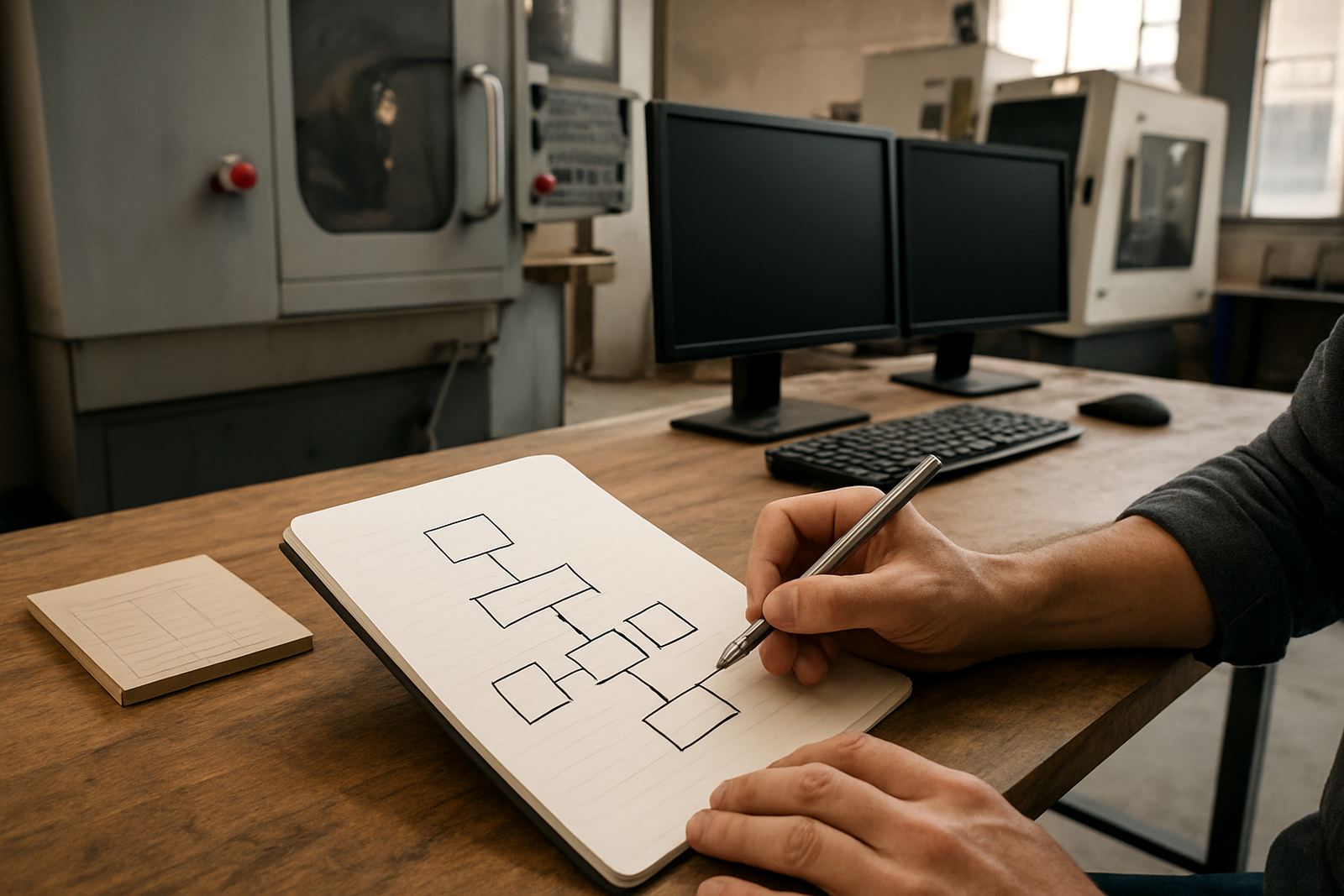
What a workflow audit covers from drawing to first part
A workflow audit is a structured review of how work moves through your CNC shop. We look at the handover from design to programming, the way files are named and stored, how tool data is managed, and what happens on the machine side before a job starts cutting. The aim is not to change everything at once, but to find the small bottlenecks that add up to lost hours over a week.
For many shops in Pretoria, Johannesburg, Durban and Cape Town, the delay is not the machine itself. It is the repeated checking, searching for the correct file, retyping setup data, or fixing a post output that could have been prevented earlier. We review the full chain and show where a cleaner method can save time, scrap and operator frustration.
- Drawing release and job handover
- CAM setup, post output and file naming
- Tool library control and machine offsets
- First article checks and revision control
- Operator instructions and sign-off points
What we inspect during the visit or remote review
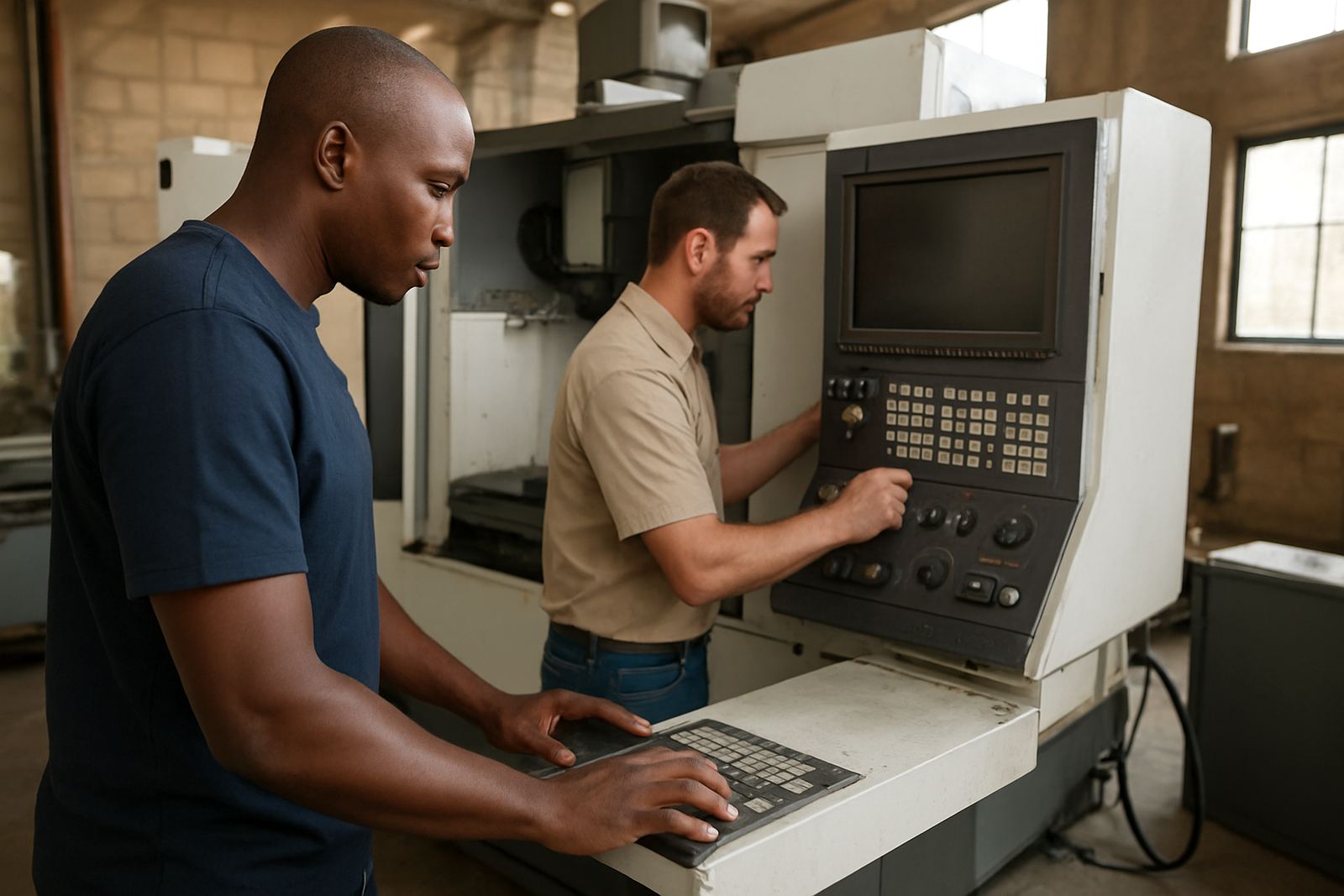
The audit is practical and based on your actual parts, not theory. We use one or two current jobs as examples and trace them from the office or programming room to the machine. If you run routing, milling, turning or plasma, we look at the steps that matter most for that process. A routing shop with sheet nests has different pain points to a turning shop with repeat jobs and short changeovers, and we adjust the review accordingly.
We pay close attention to recurring waste points such as double entry of data, inconsistent post settings, poor version control, and operators having to guess feeds, speeds or zero points. Where load-shedding has interrupted work, we also check how jobs are recovered after a shutdown, and whether the shop has a reliable resumption process.
- Software version use and licence placement
- Post-processor output and machine readiness
- Tool data, offsets and setup sheets
- Revision control and file storage discipline
- Recovery steps after power interruptions
How the audit is carried out step by step
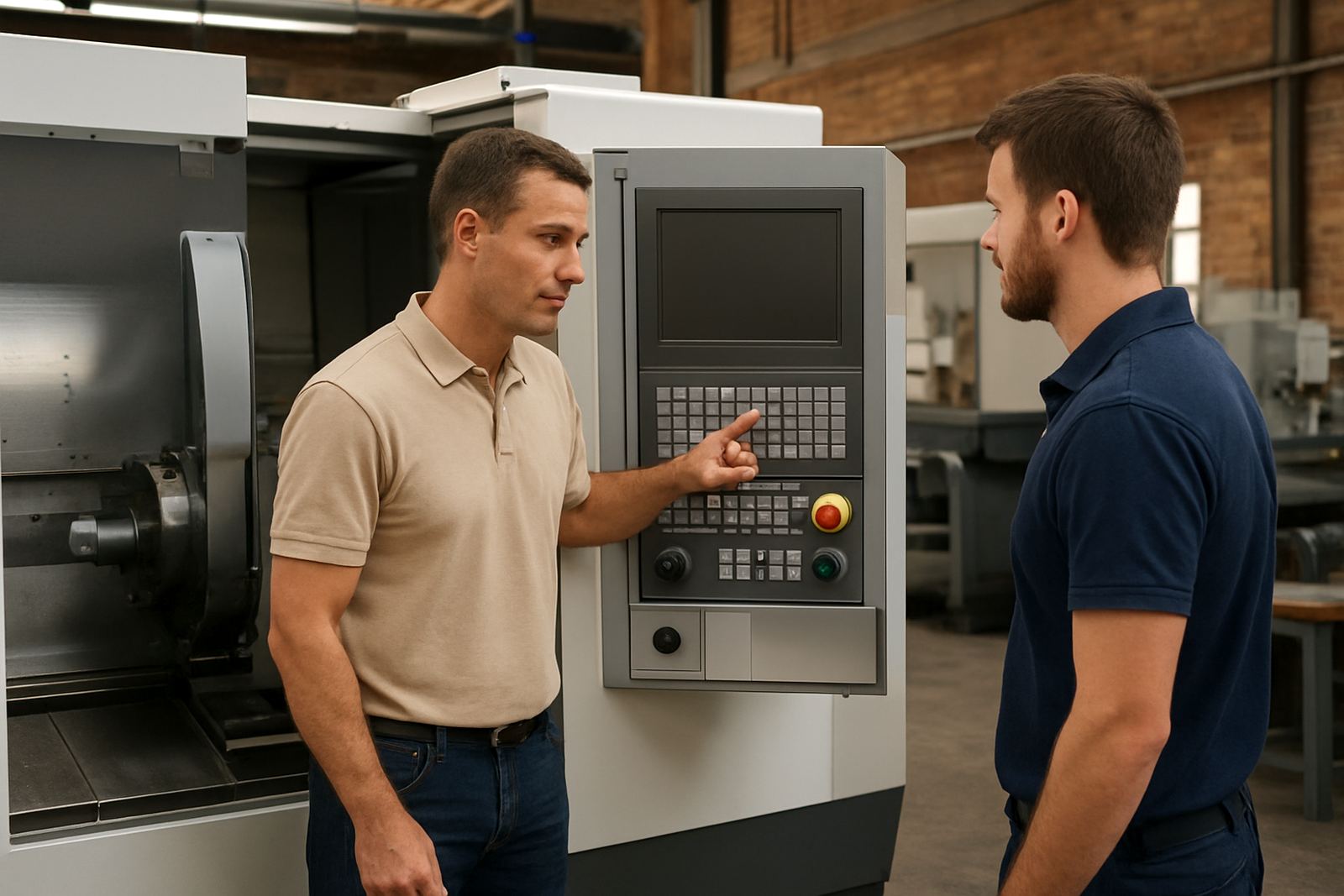
We start with a short intake so we can understand your machine mix, job type and the size of the team. Then we watch a real workflow, either on-site in Centurion, East Rand, West Rand, Vereeniging or further afield, or by remote session when that is more suitable. The review is done against your current way of working, so the findings are practical and easy to measure.
After the review, we prepare a findings summary with clear actions sorted by impact and effort. That means you can tackle the quick wins first, then plan the larger changes around production. Where needed, we also suggest follow-up work such as post tuning, machine onboarding or targeted operator training.
- 1. Intake call and job selection
- 2. Process review on live or recent work
- 3. Bottleneck mapping and time loss notes
- 4. Findings summary with priorities
- 5. Follow-up support and implementation advice
Turnaround times and what you receive afterwards
Audit scope depends on the number of machines, the complexity of the parts and whether we are reviewing one department or the full shop. Smaller operations with a single machine type may only need a short observation session and one follow-up session. Larger teams with multiple programmers and operators usually benefit from a deeper review across more than one session.
After the audit, you receive a plain-language summary that sets out the main slowdowns, the likely cause of each one, and the recommended next steps. We do not leave you with vague comments. You get specific notes on where jobs are stalling, what can be standardised, and which changes will save time without creating extra admin. If a post issue or tool data problem is affecting output, we flag it clearly so it can be corrected early.
Pricing approach for South African CNC shops
Pricing is based on scope, not guesswork. A small single-site review for one production line is priced differently from a multi-machine audit across two or three shifts. We quote after the intake so you know exactly what is included, whether travel is needed, and if remote follow-up time is part of the package. This makes budgeting easier for owner-run shops and larger workshops alike.
For many clients, the value of the audit comes from reduced setup time and fewer failed first parts. If a shop is losing even 30 minutes a day to repeated setup corrections or missing data, the savings can justify the review very quickly. We can also structure the work in stages if you want to start with one area and expand later.
- Single machine or small cell reviews
- Multi-machine and multi-shift audits
- On-site, remote or mixed delivery
- Quoted after scope confirmation
- Optional follow-up implementation support
Keeping the improvements in place after the audit
An audit only helps if the changes stick. That is why we recommend a maintenance interval for the process, especially where jobs are changing often or a new operator has joined the team. For steady production environments, a quarterly check is usually enough to catch drift in naming, storage, tool libraries and post settings. Fast-moving shops or businesses with frequent changeovers may prefer a monthly review of key points.
We also advise a process review after any major change such as a new machine, a software update, a new post-processor, or a shift in the type of work you are running. If a shop in Durban is dealing with humidity, or a Cape Town site is managing long transport delays and mixed materials, small process changes can affect consistency more than people expect. A short maintenance review keeps the workflow clean and helps prevent bad habits from coming back.
Who benefits most from a workflow audit
This service suits shops that already have CNC equipment in use but feel that jobs take longer than they should. It is especially useful when the team is growing, when programmers and operators are not following the same method, or when too much time is spent fixing avoidable issues before the spindle starts. We work with routing, milling, turning and plasma environments across Pretoria, Johannesburg, Vereeniging, Durban and Cape Town, and the same pattern often appears: too many handoffs, not enough standard steps.
If you are trying to improve throughput without buying another machine, a workflow audit is a practical place to begin. It gives you a clear view of where the work is slowing down, which steps can be standardised, and what should be trained properly so the shop can run with less wasted time.
Key facts
| Service type | Workflow audit for CNC production processes |
|---|---|
| Suitable for | Routing, milling, turning and plasma shops |
| Delivery mode | On-site, remote or mixed review |
| Typical turnaround | 1 to 3 working days depending on scope |
| Review focus | From drawing release to first good part |
| Follow-up | Action summary, priority list and implementation advice |